"[C]orrupt Thomism...Suárez strays from Aquinas are too many and significant to ignore. To name a few: (i) On metaphysics, Suárez blurred the distinction between essence and existence in created beings, which would eventually turn him into a favorite of contemporary ontology theorists like Martin Heidegger; (ii) On free will and pre-destination...advanced “congruism,” ...notion of human freedom, eerily similar to that of political liberalism; and (iii) On legal theory, Suárez seemed to argue that law resides in God’s will rather than reason, thus opening the door to voluntarism and perhaps totalitarianism"
https://thenewdigest.substack.com/p/the-uses-of-suarez
The Uses of Suarez
A Review of Kincaid, “Law From Below: How The Thought of Francisco Suárez, SJ, Can Renew Contemporary Legal Engagement”
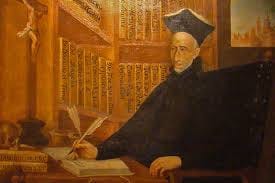
The New Digest is delighted to present this guest essay by Mr. Aníbal Sabater, a partner at Chaffetz Lindsey LLP, a specialist in international arbitration, and a noted commentator on classical legal themes. His previous work in our pages on constitutionalism in Spain and can be found here and here; and his posts at the Ius et Iustitium site, including a series on lawyers and law in Dante, can be found here.
In his 1879 Encyclical Aeterni Patris, Leo XIII urged scholars to read Aquinas directly:
“… lest the false for the true or the corrupt for the pure be drunk in, be ye watchful that the doctrine of Thomas be drawn from his own fountains, or at least from those rivulets which, derived from the very fount, have thus far flowed, according to the established agreement of learned men, pure and clear; be careful to guard the minds of youth from those which are said to flow thence, but in reality are gathered from strange and unwholesome streams.”[1]
While Leo XIII did not identify those “strange and unwholesome streams” that corrupt Thomism, a sizable list of scholars reads the charge as addressed against Francisco Suárez SJ.[2] They may well be right, because the points on which Suárez strays from Aquinas are too many and significant to ignore. To name a few:
(i) On metaphysics, Suárez blurred the distinction between essence and existence in created beings, which would eventually turn him into a favorite of contemporary ontology theorists like Martin Heidegger;
(ii) On free will and pre-destination (the notorious controversy “de auxiliis”), Suárez advanced “congruism,” a position that would eventually be adopted by the Society of Jesus, but is (rightly) viewed in the Order of Preachers as calling into question God’s omnipotence and spousing both Pelagianism and a distorted notion of human freedom, eerily similar to that of political liberalism; and
(iii) On legal theory, Suárez seemed to argue that law resides in God’s will rather than reason, thus opening the door to voluntarism and perhaps totalitarianism.
Comments